Empirical Evidence & Structural Data
Our commitment to scientific rigor demands transparency. Review the structural, functional, and in-vivo data validating the efficacy and selectivity of our therapeutic approach.
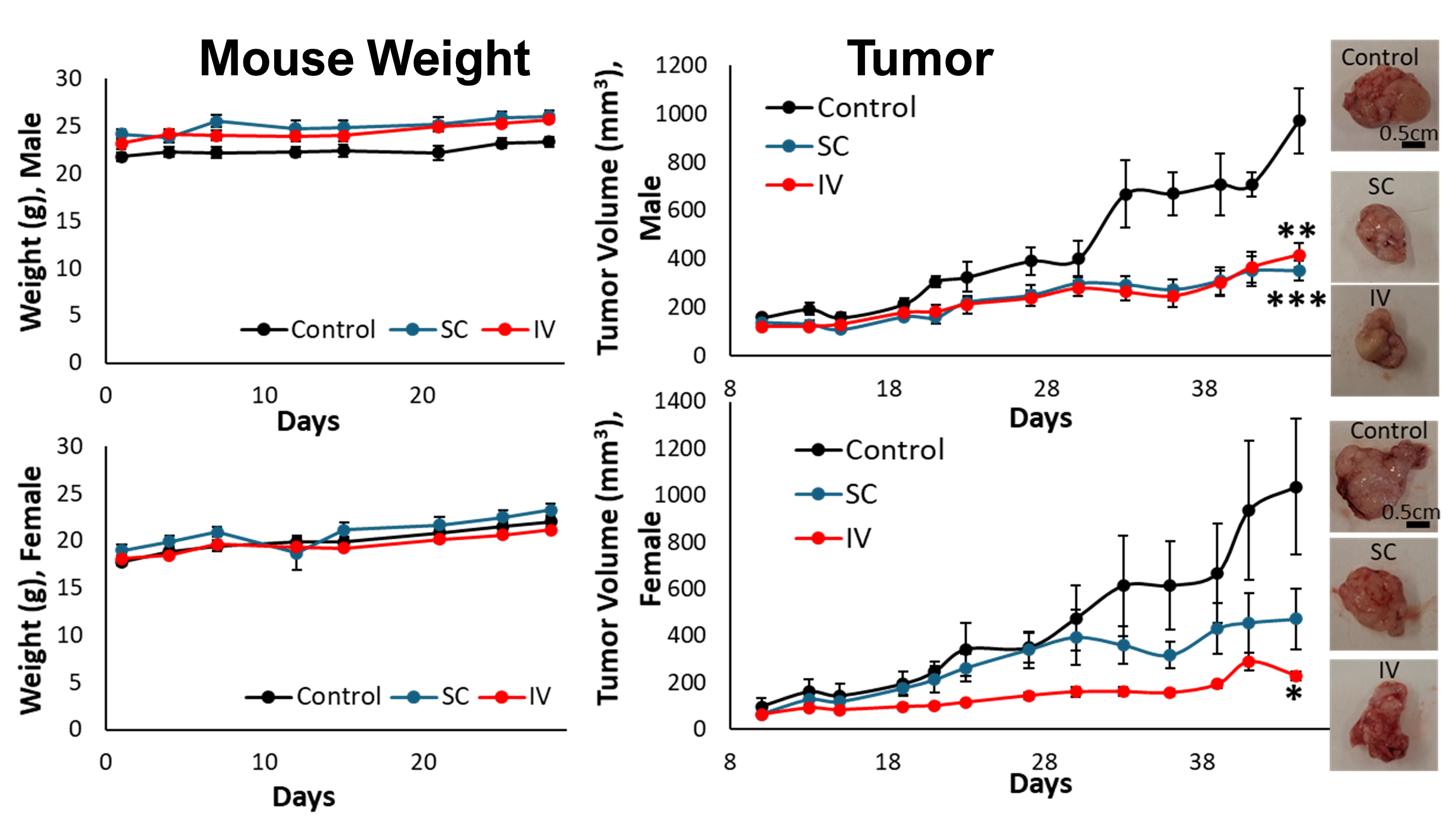
PE1 is toxic to tumors but not to normal tissue. Experiments were conducted with three groups of mice: a control group of 6 mice, a group of 8 females, and a group of 7 males. The mice were MOD/SKID, seven weeks old. The mice were injected, each, with 6 million PANC 04.03 cells. After tumor growth, the mice were injected with 2mg/kg three times a week. Variation in doses in different experiments, from 2mg/kg and up to 15mg/kg led to comparable outcomes. The control was injected with saline solution. The peptide was injected via intravenous (IV) injection or subcutaneous (SC) administration. We monitored the mouse weight, an indicator of toxicity, which was not impacted by the treatment in all three groups (first column). In the second row, we show that the growth of tumors in the treated mice is significantly suppressed compared to the control. Finally, in the third column, we show images of the extracted tumors at the end of the experiment.
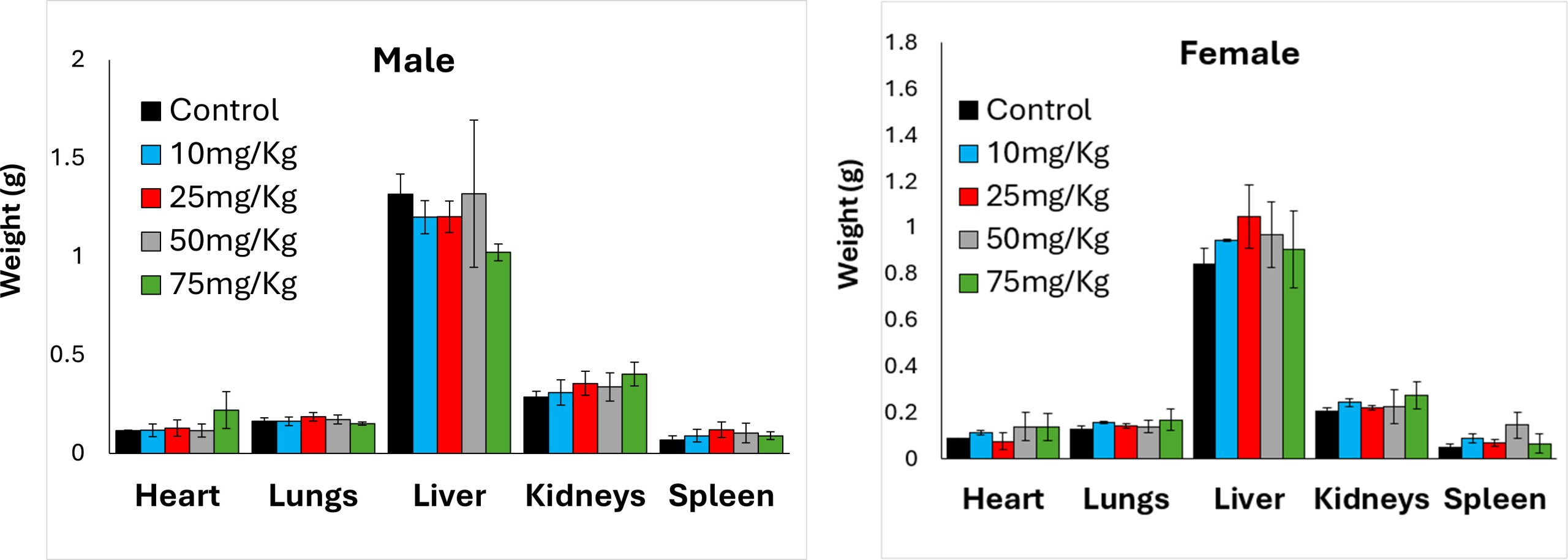
The peptide is not toxic to normal tissue. In the figure below, we show the results of acute toxicity studies on male and female mice. Mice received a single injection of 0, 10, 25, 50, and 75 mg/kg. The organs were extracted fifteen days after the injection. No significant variation in organ weights was detected.
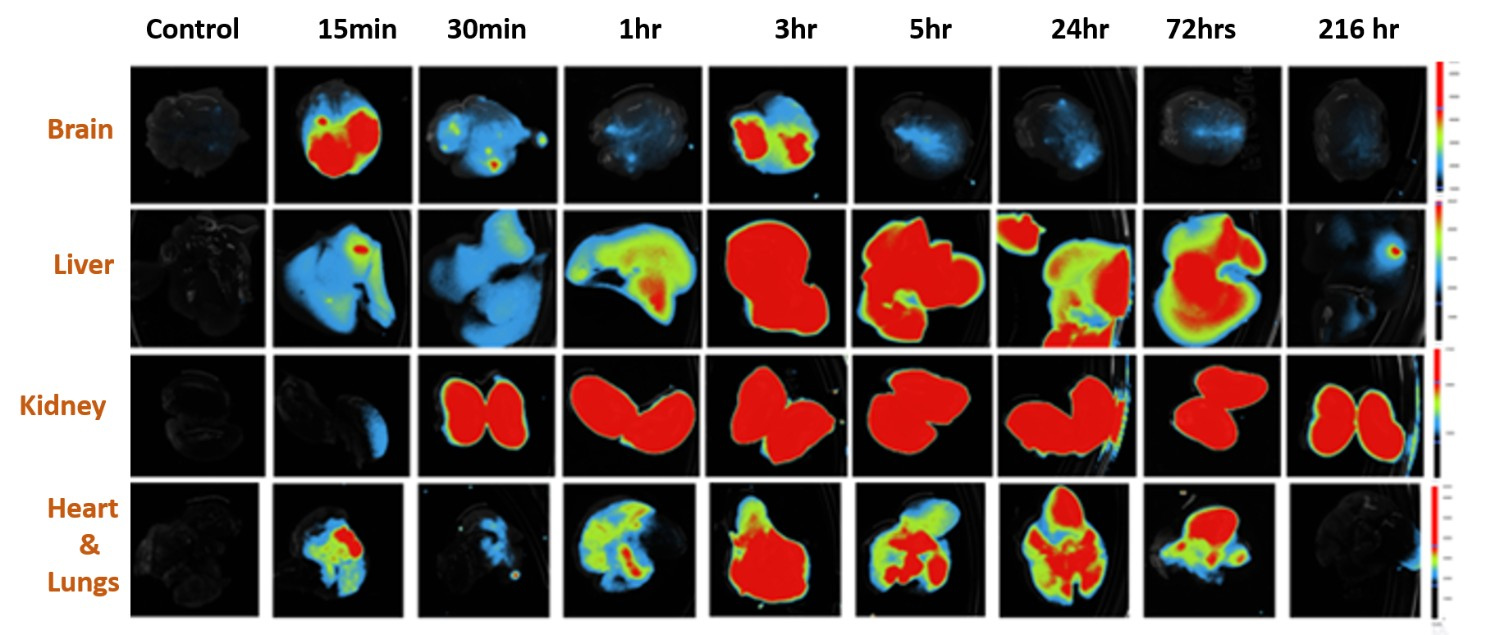
Biodistribution of Cy5-PE1
To learn about the distribution of the peptide in the plasma and different organs, seven to eight-weeks old mice were injected daily with peptides labeled with the fluorescence agent Cy5. The fluorescence was followed by IVIS equipment. On day 15, the mice were sacrificed, and blood samples and organs were extracted and analyzed