
First-in-Class Peptides Designed to Kill Cancer Cells from the Inside Out
Peptide Design & Engineering (PD&E) positions itself as a cutting-edge biotechnology innovator at the intersection of molecular engineering and oncology, providing data-driven solutions for the most aggressive forms of cancer.
We specialize in the development of targeted peptide therapeutics for difficult-to-treat cancers, specifically Pancreatic, Ovarian and TNB cancers. Utilizing advanced computer simulations and molecular dynamics, we engineer precision interventions designed for clinical safety and unparalleled efficacy.
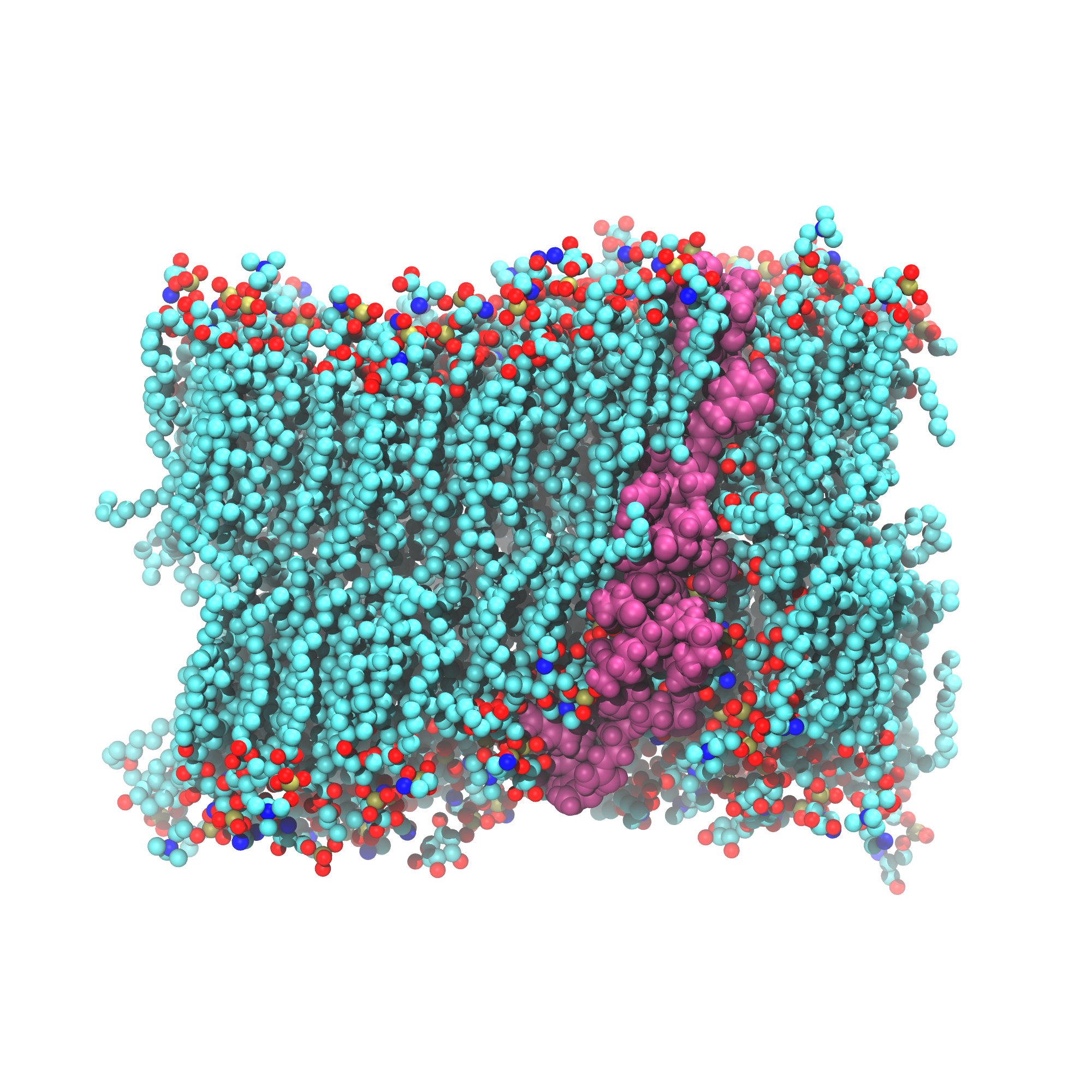
The peptide PE1 (purple), as it permeates across the plasma membrane of a pancreatic cancer cell (blue). The image is a snapshot from a Molecular Dynamics simulation that predicts transport kinetics based on statistical mechanics theory. The results assist us in designing novel permeants.
Innovation
Pioneering disruptive solutions at the intersection of molecular engineering and oncology through advanced computational models.
Scientific Rigor
Committed to an evidence-based approach, ensuring every hypothesis is validated through exhaustive structural and in-vivo data.
Precision Targeting
Engineering selective mechanisms that accurately identify and induce cellular responses in pathological tissue.
Clinical Safety
Prioritizing the preservation of healthy tissue, maintaining strict functional utilitarian design in our peptide engineering.
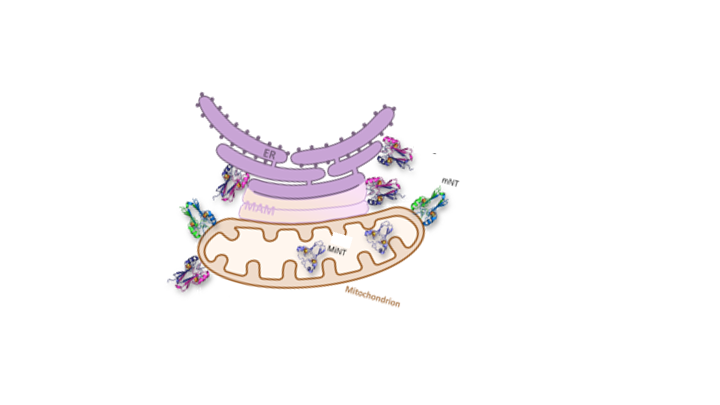
Fig 1. Schematic representation of structural relationships between the endoplasmic reticulum (ER), mitochondria-associated membranes (MAM), and mitochondrion, highlighting specific protein interactions targeted by the PEX family.
The PEX Peptide Family
Our foundational research centers on the creation and optimization of PEX family peptides. These novel therapeutics are engineered to selectively induce cell death in tumors by explicitly targeting mitochondrial dysfunction.
Unlike traditional broad-spectrum approaches, our methodology relies on precision targeting. By exploiting the unique metabolic and structural anomalies present in difficult-to-treat tumors such as Pancreatic, Ovarian, and Triple-Negative Breast cancer, PEX peptides initiate localized apoptosis while definitively sparing healthy surrounding tissue.
This paradigm shift in oncological intervention is made possible through rigorous, iterative computer simulations and molecular dynamics, allowing us to predict peptide behavior and binding affinity with unprecedented accuracy before physical synthesis begins.